
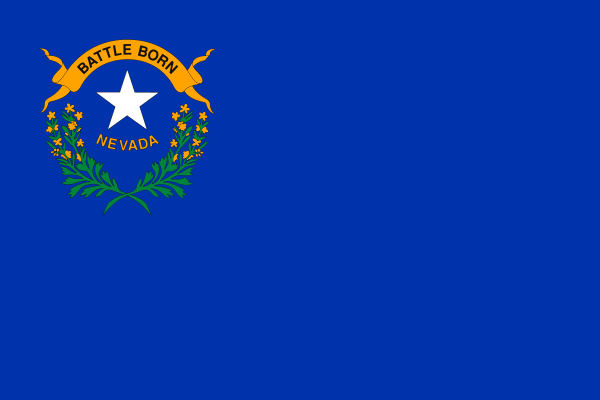
Overview
Nevada combines a statewide minimum wage, conditional daily overtime, and an employer-size-triggered paid-leave law. Its pay-transparency statute restricts salary-history inquiries and provides wage-range information at specified points in recruitment; it does not impose a general salary-range posting mandate. Payroll should also distinguish immediate discharge pay from a resignation deadline. This guide is informational, not exhaustive legal advice; review current Nevada bulletins and statutes, especially where exceptions or collective agreements apply.
What the category means. Nevada's most easily missed rules are not a universal salary range in every job ad: wage-range disclosure follows interview or applicant-request stages, and daily overtime depends on the employee's rate and exemptions. Paid leave generally applies to private employers with at least 50 employees. This label is Applicantz’s editorial reading, not an official risk rating.
Key Nevada laws
Nevada minimum wage and daily overtime
Current rate effective July 1, 2026; overtime rule ongoingThe minimum wage is a single statewide rate; beginning July 1, 2026 it is $12. For non-exempt workers below 1.5 times the applicable minimum, Nevada generally requires daily overtime after eight hours in a 24-hour period as well as overtime after 40 hours a week.
Applies to: Most employees, subject to statutory exemptions
Sourcesnv-minimumNevada Labor Commissioner — 2026 Minimum Wage Bulletin (opens in a new tab)nv-postersNevada Labor Commissioner — Required employer posters and annual wage notices (opens in a new tab)
Nevada paid leave, NRS 608.0197
January 1, 2020Covered private employers with 50 or more employees generally provide paid leave accruing by hours worked; eligible employees may use it for any reason under statutory conditions.
Applies to: Private employers with 50+ employees, subject to statutory exclusions and exceptions
Sourcesnv-paid-statuteNevada Revised Statutes §608.0197 — Paid leave (opens in a new tab)nv-postersNevada Labor Commissioner — Required employer posters and annual wage notices (opens in a new tab)
Nevada salary-history and wage-range disclosure, NRS 613.133
October 1, 2021Employers may not seek or rely on applicant salary history. Wage range/rate disclosure is required at specified stages, including after an interview when the applicant requests it; the law is not a general all-postings range mandate.
Applies to: Employers and employment agencies recruiting in Nevada
Sourcesnv-rangeNevada Revised Statutes Chapter 613 — Employment practices (opens in a new tab)
Federal FLSA and FMLA
OngoingFederal overtime exemptions and FMLA eligibility tests continue to apply in addition to Nevada rules.
Applies to: Coverage varies by statute and exemption
Sourcesus-flsaU.S. Department of Labor — FLSA wage and overtime guidance (opens in a new tab)us-fmlaU.S. Department of Labor — FMLA Fact Sheet 28 (opens in a new tab)
Pay rules
- Minimum wage
- $12.00 per hour statewide effective July 1, 2026, subject to statutory exemptions and any later official adjustment.
- Overtime
- For non-exempt workers earning below 1.5 times the applicable minimum wage, generally after 8 hours in a 24-hour period or 40 hours in a workweek; federal weekly overtime still applies above the threshold.
- Final pay timing
- Discharge: wages are due immediately, with a short statutory outside period if immediate payment is impracticable. Resignation: next regular payday or the statutory shorter deadline, whichever comes first.
- Pay transparency
- Nevada does not require a range in every public posting. It does bar salary-history inquiries and requires a wage range or rate at specified hiring stages, including after an interview when requested. Train interviewers and recruiters to provide the range promptly and use separate controls for promotion/transfer requests.
Rates and thresholds change, and some cities and counties set their own. Confirm current figures with the sources below.
Sourcesnv-minimumNevada Labor Commissioner — 2026 Minimum Wage Bulletin (opens in a new tab)nv-postersNevada Labor Commissioner — Required employer posters and annual wage notices (opens in a new tab)nv-wagesNevada Revised Statutes Chapter 608 — Compensation, wages and hours (opens in a new tab)us-flsaU.S. Department of Labor — FLSA wage and overtime guidance (opens in a new tab)
Leave rules
Nevada paid leave for any reason
Paid- Duration
- Accrual equivalent to about 40 hours in a full work year under the standard accrual method
- Applies to
- Generally private employers with 50+ employees
Accrual is at least 0.01923 hours per hour worked. Covered leave may be used for any reason; check statutory exceptions, use timing, and employer alternatives.
Sourcesnv-paid-statuteNevada Revised Statutes §608.0197 — Paid leave (opens in a new tab)nv-postersNevada Labor Commissioner — Required employer posters and annual wage notices (opens in a new tab)
Federal FMLA
Unpaid- Duration
- Up to 12 workweeks for most qualifying reasons
- Applies to
- Generally a covered employer with 50 employees within 75 miles and an eligible worker with 12 months and 1,250 hours
No Nevada state expansion replaces these federal tests. Separate job-protection review from paid leave.
Sourcesus-fmlaU.S. Department of Labor — FMLA Fact Sheet 28 (opens in a new tab)
Test daily overtime and annual wage updates
Nevada has a state daily-overtime rule in addition to the federal weekly test. Generally, a non-exempt employee earning less than 1.5 times the applicable minimum wage is due overtime after eight hours in a 24-hour period or 40 hours in a workweek, subject to statutory exceptions. The state publishes an annual minimum-wage bulletin; the single rate is $12 per hour effective July 1, 2026. Use the current notice, not an older two-tier summary.
Employees paid at or above the threshold are still subject to federal overtime after 40 hours if they are non-exempt. Federal executive, administrative, professional, computer, and outside-sales exemptions have specific criteria, including duties tests for many positions; exemption status is not established by title. Keep daily records by workday as well as weekly totals; a weekly-only timekeeping report can miss Nevada daily overtime.
Sourcesnv-minimumNevada Labor Commissioner — 2026 Minimum Wage Bulletin (opens in a new tab)nv-postersNevada Labor Commissioner — Required employer posters and annual wage notices (opens in a new tab)us-flsaU.S. Department of Labor — FLSA wage and overtime guidance (opens in a new tab)
Apply the paid-leave rule to covered private employers
Nevada's paid-leave statute generally covers private employers with 50 or more employees. Under the accrual method, employees earn at least 0.01923 hours per hour worked, roughly 40 hours over a full 2,080-hour year. The law permits use for any reason and restricts requiring an explanation or documentation for ordinary use, subject to statutory rules. There are exclusions and alternative accrual or frontloading approaches, so first confirm coverage and the employer's chosen compliant method.
Do not relabel statutory leave as vacation with a stricter approval test. Maintain a balance and explain any waiting period or carryover policy only after checking the statute and current agency guidance. Federal FMLA is independent and applies only if both its employer and employee eligibility tests are satisfied.
Sourcesnv-postersNevada Labor Commissioner — Required employer posters and annual wage notices (opens in a new tab)nv-paid-statuteNevada Revised Statutes §608.0197 — Paid leave (opens in a new tab)us-fmlaU.S. Department of Labor — FMLA Fact Sheet 28 (opens in a new tab)
Disclose wage ranges at the legally required hiring stage
Nevada prohibits employers and employment agencies from seeking or relying on an applicant's wage or salary history. After an interview, an applicant may request the wage or salary range or rate for the position, and an employer must provide it under the statute. Separate rules apply to certain promotions or transfers. This is a process rule, not a universal requirement to print compensation ranges in every job advertisement.
At separation, an employer discharge generally makes wages due immediately; if immediate payment is not possible, a short statutory outside period applies. A resignation generally follows the next regular payday or a shorter statutory limit, whichever comes first. Validate the final-pay date based on separation type and include accrued wages, commissions, and other earned amounts. Vacation payout remains distinct from mandatory paid-leave balances and depends on applicable law and policy.
Sourcesnv-rangeNevada Revised Statutes Chapter 613 — Employment practices (opens in a new tab)nv-wagesNevada Revised Statutes Chapter 608 — Compensation, wages and hours (opens in a new tab)nv-postersNevada Labor Commissioner — Required employer posters and annual wage notices (opens in a new tab)
Facts and pitfalls
Worth knowing
- Nevada's statewide minimum wage is $12 per hour effective July 1, 2026.
- Daily overtime generally applies below 1.5 times minimum wage, in addition to the federal weekly test.
- Paid leave generally covers private employers with 50 or more employees.
- Wage-range disclosure follows specified hiring stages; it is not a universal job-ad range mandate.
Easy to miss
- A weekly-only overtime audit can miss Nevada's separate eight-hour daily trigger.
- Do not ask for or rely on salary history; provide the range when an interviewed applicant requests it.
- Confirm statutory employer-size coverage before using a Nevada leave exclusion.
- A discharge and a resignation have different final-wage deadlines.
Employer checklist
A starting point for review, not a complete list of obligations.
- Update payroll to the $12 statewide minimum effective July 1, 2026 and calendar future Nevada Labor Commissioner bulletins.
- Configure daily and weekly overtime tests for each non-exempt worker; retain workday start/end records.
- Count private employees under the paid-leave statute, document exceptions, and accrue at least 0.01923 hour per hour worked where covered.
- Remove salary-history questions from applications, interview scripts, and third-party recruiter instructions.
- Create a documented process to deliver the wage range after interviews when requested and to handle promotion/transfer requests.
- Pay a discharge promptly and separately calendar resignation deadlines; reconcile commissions and earned wages.
Hypothetical example
Hypothetical: A Nevada non-exempt employee earns below 1.5 times the state minimum, works nine hours on Tuesday and 38 hours in the week, and requests paid leave for a personal errand. HR evaluates one hour of daily overtime, checks employer coverage and the employee's accrued leave, and does not demand an explanation for statutory leave use.
An invented scenario for illustration. It is not a real company or a ruling.
Common questions about Nevada
Must every Nevada job ad show a salary range?
No. Nevada's wage-range rule applies at specified recruitment stages, including after an interview when the applicant requests it; it is not a universal job-posting range mandate.
When does Nevada daily overtime apply?
Generally, a non-exempt worker earning below 1.5 times the applicable minimum wage earns overtime after eight hours in a 24-hour period or 40 hours in a workweek, subject to exceptions.
Can an employee be asked why Nevada paid leave is needed?
Covered paid leave may be used for any reason, and employers generally may not require the employee to provide a reason. Apply the statute's precise conditions and exceptions.
Sources and scope
Scope. Written by the Applicantz editorial team from the public sources below. It highlights common rules for small employers and does not cover every statute, exception, local ordinance or recent change. It is general information, not legal advice. Consider confirming specifics with the agency or an employment attorney. Last editorial update: October 1, 2026.
- nv-minimumNevada Labor Commissioner — 2026 Minimum Wage Bulletin (opens in a new tab)
- nv-postersNevada Labor Commissioner — Required employer posters and annual wage notices (opens in a new tab)
- nv-paid-statuteNevada Revised Statutes §608.0197 — Paid leave (opens in a new tab)
- nv-rangeNevada Revised Statutes Chapter 613 — Employment practices (opens in a new tab)
- nv-wagesNevada Revised Statutes Chapter 608 — Compensation, wages and hours (opens in a new tab)
- us-fmlaU.S. Department of Labor — FMLA Fact Sheet 28 (opens in a new tab)
- us-flsaU.S. Department of Labor — FLSA wage and overtime guidance (opens in a new tab)
Keep exploring
Related glossary terms
- Pay transparencyDisclosing pay ranges in job postings or on request.
- Salary rangeThe minimum and maximum pay budgeted for a role.
- Total compensationAll pay and benefits a candidate would receive.

 vs. Greenhouse
 vs. Lever
 vs. Ashby
 vs. Workable
 vs. iCIMS
 vs. SmartRecruiters
 vs. BambooHR
 vs. Rippling
 vs. Workday Recruiting
 vs. Gem
 vs. JazzHR
 vs. Teamtailor
 vs. Bullhorn
