
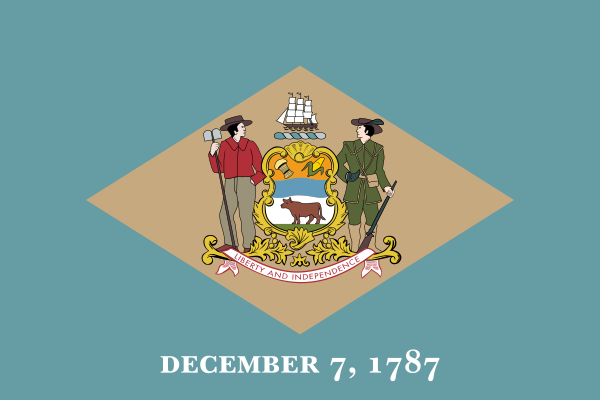
Overview
Delaware employers should distinguish program participation from an individual employee's benefit eligibility. The Healthy Delaware Families Act began contributions in 2025 and opened claims in 2026; most covered employers with 10 or more employees must participate, but the benefit package varies by employer size. Covered workers generally must perform most work in Delaware and satisfy employer-tenure and hours tests. This guide is informational, not exhaustive legal advice; consult current Delaware DOL regulations, employer FAQs, and the statute.
What the category means. Delaware Paid Leave moved from implementation to claims in 2026. Employer size determines whether parental-only or broader coverage is required, while an employee's primary work location, 12 months of service, and 1,250 hours matter for benefit eligibility. Incorporation in Delaware alone does not decide where employment laws apply. This label is Applicantz’s editorial reading, not an official risk rating.
Key Delaware laws
Healthy Delaware Families Act — Delaware Paid Leave
Contributions January 1, 2025; claims January 1, 2026The program began contributions in 2025 and accepted employee claims beginning January 1, 2026. Employer size determines required benefit categories; current guidance uses primary work location, tenure, and hours tests for individual eligibility.
Applies to: Generally 10+ employees, with parental-only and broader coverage tiers; small employers may elect participation
Sourcesde-paidDelaware Department of Labor — Delaware Paid Leave (opens in a new tab)de-lawDelaware General Assembly — Healthy Delaware Families Act session law (opens in a new tab)de-eligibilityDelaware Department of Labor — Paid Leave eligibility FAQs (opens in a new tab)
Delaware Wage Payment and Collection Act, Title 19 Chapter 11
OngoingSets wage-payment schedules, deductions, and employee wage rights, including final wage payment requirements.
Applies to: Employers of workers in Delaware under statutory definitions
Sourcesde-wagesDelaware Code — Title 19, Chapter 11: Wage Payment and Collection (opens in a new tab)
Delaware Minimum Wage Act, Title 19 Chapter 9
January 1, 2025 for the $15 rateThe current scheduled general minimum is $15.00 per hour, with statutory exceptions and tipped-worker rules.
Applies to: Covered Delaware employees; exemptions and special rates apply
Sourcesde-minimumDelaware Code — Title 19, Chapter 9: Minimum Wage (opens in a new tab)
Federal FMLA and FLSA
OngoingFederal leave and wage laws retain separate employer, employee, and exemption tests; Delaware's paid-benefit program does not remove them.
Applies to: Coverage varies by statute and exemption
Sourcesus-fmlaU.S. Department of Labor — FMLA Fact Sheet 28 (opens in a new tab)us-flsaU.S. Department of Labor — FLSA wage and overtime guidance (opens in a new tab)
Pay rules
- Minimum wage
- $15.00 per hour under the current state schedule; verify tipped rates, exemptions, and any updated official notice.
- Overtime
- Generally FLSA overtime after 40 hours in a workweek for non-exempt employees; apply duties-based exemptions and industry-specific rules.
- Final pay timing
- For a quit, discharge, suspension, or layoff, earned wages are generally due on the later of the next date wages would be paid under the regular pay cycle or three business days after the last day worked.
- Pay transparency
- Delaware does not impose a general statewide salary-range-in-every-ad requirement. Equal-pay protections are not equivalent to a universal posting mandate. Check specific statutory and local recruitment duties rather than implying every Delaware opening must disclose a range.
Rates and thresholds change, and some cities and counties set their own. Confirm current figures with the sources below.
Sourcesde-minimumDelaware Code — Title 19, Chapter 9: Minimum Wage (opens in a new tab)de-wagesDelaware Code — Title 19, Chapter 11: Wage Payment and Collection (opens in a new tab)us-flsaU.S. Department of Labor — FLSA wage and overtime guidance (opens in a new tab)
Leave rules
Delaware Paid Leave
Paid- Duration
- Up to 12 weeks of parental leave; medical and family-care limits vary by benefit category and combine under statutory caps
- Applies to
- Covered employer tier and worker: primarily Delaware work, 12 months with employer, and 1,250 hours in prior 12 months generally required
Benefits began in 2026, generally replacing up to 80% of wages subject to the current weekly cap. Program coverage and claim eligibility are different tests.
Sourcesde-paidDelaware Department of Labor — Delaware Paid Leave (opens in a new tab)de-eligibilityDelaware Department of Labor — Paid Leave eligibility FAQs (opens in a new tab)de-lawDelaware General Assembly — Healthy Delaware Families Act session law (opens in a new tab)
Federal FMLA
Unpaid- Duration
- Up to 12 workweeks in most qualifying circumstances
- Applies to
- Generally a covered 50+ employer within 75 miles and an eligible employee with 12 months and 1,250 hours
Federal job protection is separate from Delaware wage benefits; determine whether leave runs concurrently under applicable rules.
Sourcesus-fmlaU.S. Department of Labor — FMLA Fact Sheet 28 (opens in a new tab)
Match the employer's size tier to the employee's claim eligibility
Delaware Paid Leave is active: contributions started January 1, 2025 and employees began submitting claims January 1, 2026. The coverage tiers are important. Employers with 10–24 employees generally provide parental leave coverage; employers with 25 or more generally provide parental, medical, and family-care coverage; employers below 10 are generally excluded unless they elect participation. Confirm the statute's counting rules, seasonal categories, and any approved private-plan option before concluding an employer is outside the program.
An employee's benefit eligibility is a separate test. Current DOL guidance generally requires working primarily in Delaware (at least 60% of work in the quarter), at least 12 months with the same employer, and at least 1,250 hours in the prior 12 months. The benefit may replace up to 80% of wages, subject to a weekly cap; the 2026–2027 maximum is $900 per week under the current statute. Keep quarterly wage/hour reports accurate and route claims to the state.
Sourcesde-paidDelaware Department of Labor — Delaware Paid Leave (opens in a new tab)de-lawDelaware General Assembly — Healthy Delaware Families Act session law (opens in a new tab)de-eligibilityDelaware Department of Labor — Paid Leave eligibility FAQs (opens in a new tab)
Keep wage-payment duties separate from the paid-leave fund
Delaware's minimum wage is $15.00 per hour under the current phase-in, subject to exemptions and special tipped-worker rules. Federal overtime generally applies after 40 hours in a workweek to non-exempt employees. Federal executive, administrative, professional, computer, and outside-sales exemptions require applicable criteria, including duties tests for many roles; job title alone does not create an exemption. Delaware's Wage Payment and Collection Act requires separated workers' earned wages on the later of the next regular payday for the last day worked or three business days after the last day worked. Preserve a full calculation of earned wages, commissions, and authorized deductions.
There is no general Delaware requirement to publish a salary range in every job posting. Delaware equal-pay protections address discriminatory compensation, but that is not a universal posting mandate. Keep documented compensation criteria and verify current state and local rules before applying a hiring disclosure requirement.
Sourcesde-minimumDelaware Code — Title 19, Chapter 9: Minimum Wage (opens in a new tab)de-wagesDelaware Code — Title 19, Chapter 11: Wage Payment and Collection (opens in a new tab)de-paidDelaware Department of Labor — Delaware Paid Leave (opens in a new tab)
Apply work location and federal leave eligibility carefully
A corporation's state of formation does not automatically make Delaware employment law govern employees who work elsewhere. For Paid Leave, use where work is physically performed and the program's quarterly primary-work test. For wage floors and other workplace rules, separately assess the worker's actual worksite and any other applicable state or local law.
Delaware Paid Leave benefits are not interchangeable with federal FMLA. FMLA generally requires a covered employer with 50 employees within 75 miles and an employee who has 12 months' service and 1,250 hours in the prior year. Coordinate job protection, claim benefits, and employer PTO only after comparing each rule's eligibility, permitted reasons, and concurrency provisions.
Sourcesde-paidDelaware Department of Labor — Delaware Paid Leave (opens in a new tab)de-eligibilityDelaware Department of Labor — Paid Leave eligibility FAQs (opens in a new tab)us-fmlaU.S. Department of Labor — FMLA Fact Sheet 28 (opens in a new tab)us-flsaU.S. Department of Labor — FLSA wage and overtime guidance (opens in a new tab)
Facts and pitfalls
Worth knowing
- Delaware Paid Leave contributions began in 2025 and employee claims began in 2026.
- Employer size determines whether Delaware Paid Leave coverage is parental-only or includes additional categories.
- Individual eligibility generally requires primary Delaware work, 12 months with the employer, and 1,250 hours.
- Final earned wages are due at the later of the next regular-cycle date or three business days after the last day worked.
Easy to miss
- Do not assume every participating employer funds every leave category; check the 10–24 and 25+ tiers.
- A Delaware home address or company incorporation alone does not establish primary-work eligibility.
- Keep the current $900 weekly maximum specific to the 2026–2027 period.
- Apply the later-of final-pay formula rather than a next-payday-only rule.
Employer checklist
A starting point for review, not a complete list of obligations.
- Classify the employer under the 10–24 and 25+ employee tiers and identify any elective coverage or approved private plan.
- Report wages and hours on the required quarterly schedule and withhold/remit the current program contribution under DOL instructions.
- For each claim, verify Delaware primary work location, one-year service, and 1,250-hour eligibility before advising on benefit availability.
- Use the current $900 weekly maximum only for the 2026–2027 period; recheck later statutory caps and benefit-year rules.
- Update wage tables to the current $15 state minimum, with separate tipped rates and exemptions where applicable.
- Audit final checks, deductions, salary-history screening, and written PTO payout policies separately from Paid Leave.
Hypothetical example
Hypothetical: A 20-employee employer operates in Delaware and Pennsylvania. It generally participates in Delaware Paid Leave for parental coverage, but it should not assume the program pays a worker who lives in Delaware yet performs most work in Pennsylvania. HR checks the quarterly primary-work test, tenure and hours, and submits accurate wage reports.
An invented scenario for illustration. It is not a real company or a ruling.
Common questions about Delaware
Are Delaware Paid Leave benefits available in 2026?
Yes. Contributions began in 2025, and claims opened January 1, 2026. Employer tier and an employee's separate eligibility tests determine coverage and benefits.
Does every employer with 10 employees provide every leave category?
No. The Act uses size tiers: employers with 10–24 employees generally provide parental coverage, while employers with 25 or more generally provide the broader medical and family-care categories.
Does forming a company in Delaware make all staff subject to Delaware employment law?
No. Employment obligations generally follow where work is performed and the statute's coverage rules, not merely the company's state of incorporation.
Sources and scope
Scope. Written by the Applicantz editorial team from the public sources below. It highlights common rules for small employers and does not cover every statute, exception, local ordinance or recent change. It is general information, not legal advice. Consider confirming specifics with the agency or an employment attorney. Last editorial update: October 1, 2026.
- de-paidDelaware Department of Labor — Delaware Paid Leave (opens in a new tab)
- de-lawDelaware General Assembly — Healthy Delaware Families Act session law (opens in a new tab)
- de-eligibilityDelaware Department of Labor — Paid Leave eligibility FAQs (opens in a new tab)
- de-wagesDelaware Code — Title 19, Chapter 11: Wage Payment and Collection (opens in a new tab)
- de-minimumDelaware Code — Title 19, Chapter 9: Minimum Wage (opens in a new tab)
- us-fmlaU.S. Department of Labor — FMLA Fact Sheet 28 (opens in a new tab)
- us-flsaU.S. Department of Labor — FLSA wage and overtime guidance (opens in a new tab)

 vs. Greenhouse
 vs. Lever
 vs. Ashby
 vs. Workable
 vs. iCIMS
 vs. SmartRecruiters
 vs. BambooHR
 vs. Rippling
 vs. Workday Recruiting
 vs. Gem
 vs. JazzHR
 vs. Teamtailor
 vs. Bullhorn
